
Does your business need a custom website, or would a simpler site do the job? A tailored build isn’t automatically better. It’s useful when your business has a clear need that a standard setup can’t meet, such as a specific customer journey or a function your website depends on. If you’re searching for custom web design melbourne, start by defining the problem your website needs to solve.
It’s reasonable to wonder what “custom” actually includes, and whether it means more complexity or expense. The answer depends on what the website needs to do. Custom design can shape the layout and visitor experience around your goals. Custom development can add functions to support the way your business works. Neither is necessary just for the label.
This guide explains what makes a website custom rather than template-based, and how to recognise when a tailored approach solves a real business problem. You’ll also learn what to clarify about your goals, useful features and project scope before getting started. SSAWAY offers one-page, shopfront and e-commerce websites, alongside custom web development. You can review and approve the finished website before payment, so you can assess the result before paying.
Key Takeaways
- Custom web design shapes layouts, visitor journeys, content and functions around specific business needs, not just appearance.
- Start with the business problem, then connect it to what visitors need and the website functions that can help.
- Compare custom web design melbourne with templates and a one-page site to see which approach fits your goals without adding unnecessary complexity.
- Check whether your current tools and page structure can do the job, or whether workarounds point to a need for custom development.
- A clear project scope keeps the focus on useful features. With SSAWAY, there’s no upfront payment, and you review and approve the finished website before payment.
What custom web design means for an Australian business
Custom web design is the planning and creation of a website around a business’s specific goals, customers and practical requirements. It can tailor the layout, visitor journey, content structure or website functions. It doesn’t automatically mean building every element from scratch, and it isn’t the right fit for every business.
Design and development work together, but solve different parts of the problem. Web design covers how a website is arranged and experienced; development makes its functions work. A tailored project may involve changes to either or both. The useful question isn’t whether a website looks unique. It’s whether the structure helps people find information and complete the task they came to do.
What makes a website custom rather than template-based?
A template gives you a pre-built structure to work within. You can often adjust colours, images, text and some page elements, but the starting point is already set. Custom work starts with defined needs and shapes the relevant parts of the website around them.
For example, a business might need visitors to choose a service, provide details and send an enquiry through a particular route. If a standard page layout makes that journey confusing, a tailored structure may help. Familiar elements such as menus, forms and clear buttons can still be part of the design. Custom doesn’t have to mean unfamiliar.
Does custom web design mean building everything from scratch?
No. Customisation can focus on one important page, an enquiry journey or a function that existing tools don’t handle well. Other parts can remain straightforward. The scope should follow the business priority, not the urge to make every detail technically novel.
For a business exploring custom web design melbourne, the practical test is simple: what needs to work better, and where does the current setup get in the way? If the answer points to a specific gap, a tailored change may be worthwhile. If a simple page or existing structure already meets the need, custom development may add work without adding value. Before settling on features, write down the problem, who experiences it and what a better outcome would look like.
How custom website design turns business needs into useful features
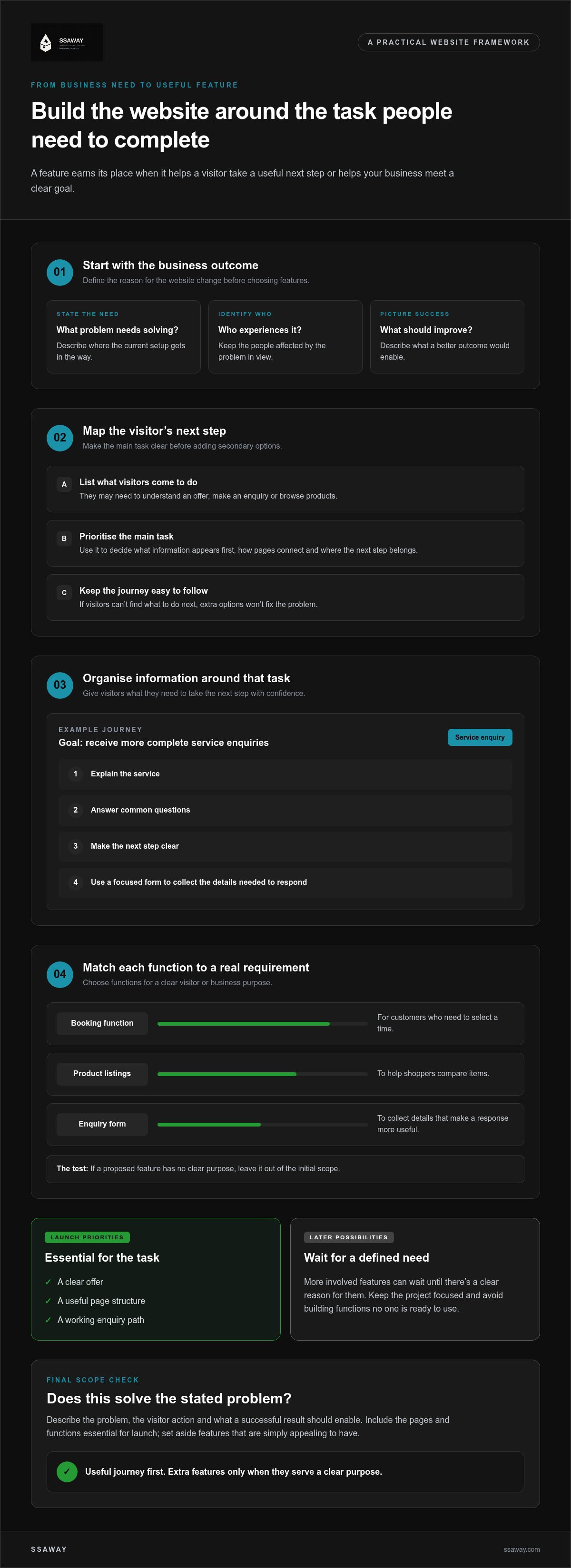
A website feature earns its place when it helps a visitor take a useful next step or helps the business meet a clear goal. A practical route from requirement to feature is to define the business outcome, identify what visitors need to do, organise the relevant information, then choose the page structure and functions that support that task.
For example, if the goal is to receive more complete service enquiries, consider what a potential customer needs to know before getting in touch. A page could explain the service, answer common questions and make the next step clear. A focused form could collect the details needed to respond. The result is a useful journey, not a collection of extras.
Start with the task visitors need to complete
List the main things visitors come to your website to do. They might need to understand an offer, make an enquiry or browse products. These tasks help determine which information appears first, how pages connect and where calls to action belong. Prioritise the main task before adding secondary features. If visitors can’t find the next step, extra options won’t fix the problem.
Clear scope keeps decisions grounded. Describe the problem, the intended visitor action and what a successful result should enable. Then decide which pages and functions are essential for launch. This gives you a straightforward way to assess proposed features: does this solve the stated problem, or is it simply appealing to have?
Match website functions to real business requirements
A booking function may suit a business that needs customers to select a time. Product listings can help shoppers compare items. An enquiry form can collect details that make a response more useful. Each feature should have a clear purpose for the visitor or the business. If there isn’t one, leave it out of the initial scope.
Separate essentials from later possibilities. A clear offer, useful page structure and working enquiry path may be the launch priorities; a more involved feature can wait until there’s a defined need for it. This keeps the project focused and avoids building functions that no one is ready to use.
The U.S. Web Design System offers guidance for creating clear, accessible digital experiences. Its principles can prompt useful questions about whether a page is easy to understand and act on, while your project scope should reflect your business and audience.
Useful website functions solve a visitor’s real problem and help your business reach a defined goal. Apply that test to every proposed feature. To explore how a focused project could take shape, review SSAWAY’s website design options.
Custom web design versus templates, builders and simpler sites
There’s no automatic winner. The right option depends on what your website needs to do, not your business’s size or how impressive a particular approach sounds. Compare the options against your requirements and the changes you expect to make.
| Approach | Flexibility | Setup effort | Specific functions | Ongoing changes |
|---|---|---|---|---|
| Custom design or development | Can be shaped around defined pages, journeys and functions | More planning around requirements and scope | Useful where standard structures don’t meet a specific need | Changes can be planned around the business’s priorities |
| Website builder or template | Uses a pre-built structure, often with options to adjust content and layout | Starts from an existing framework | Can suit common needs; fit depends on the available features | Updates may be straightforward within the chosen setup |
| Simpler one-page site | Focused on a single page and a clear message | Limited page structure to organise | Can work for a straightforward offer and contact path | Content can change as the offer or priorities evolve |
When a template or website builder may be enough
If your offer is straightforward, visitors need a familiar page structure, and the main action is to get in touch, a template or builder may do the job. Starting from an existing structure can keep decisions focused when your requirements are limited. Your needs may change over time, so reassess the website if the offer, visitor tasks or required functions change.
When custom design or development may be a better fit
A distinct visitor journey, a particular function or an unusual way of organising information can signal that a standard setup isn’t working well. Tailored design or development can address those requirements directly. Name the problem first, then scope only the work that helps solve it. Read the guide to custom website design services and development for more on what tailored work can involve.
Don’t choose custom work for prestige, or a template just because it seems simpler. Compare the approach with the tasks visitors need to complete and the changes you expect to make. If you’re weighing up budget considerations, the existing website-cost guide explains the factors that can affect a project’s price. For businesses considering custom web design melbourne, the same rule applies: choose the level of flexibility your requirements call for, not more than you need.
How to tell whether your business is ready for custom web design
Start with the problem your current website needs to solve. A tailored build may be worth exploring if a key customer task is difficult to complete, staff rely on awkward workarounds, or the site can’t support an essential function. Use these questions to separate a genuine requirement from a feature that merely sounds appealing.
Five questions to clarify before planning a tailored website
- 1. What problem must the website solve? State the outcome you need, such as helping visitors understand your offer or making it easier to enquire.
- 2. What should visitors understand or do? Name the main action, then consider what information they need to take it.
- 3. Where does the current site create friction? Identify the page, task or limitation that causes the most difficulty for customers or staff.
- 4. Can your existing tools and page structure meet the need? Note any major workarounds. If a visitor has to repeat information or staff have to transfer details manually, describe that clearly.
- 5. What’s essential now, and what can wait? List required functions, content needs and likely changes, then separate launch priorities from future improvements.
Use your answers to make a short project brief. Include the main audience actions, the content needed to support them, the functions required and any changes you expect. This makes it easier to judge whether custom design or development addresses a real gap, rather than assuming a more involved build is automatically better.
How to avoid adding complexity without a clear purpose
Give every proposed page and function a reason to exist. Tie it to a visitor need or a business goal. If its purpose is unclear, it may not belong in the initial project. Watch for features that duplicate what another tool already does, content with no clear owner, or launch requirements that aren’t needed for the main visitor task.
Before work begins, compare the proposed scope with your original priorities. Has the core problem stayed in focus? Are the essential functions still clearly defined? Have new ideas pushed aside the tasks customers need to complete? This review can keep the project useful and manageable.
If you’ve identified a clear requirement your current site can’t meet, explore custom website development as a practical next step.
What a clear custom web design project looks like with SSAWAY
A clear website project starts with the job the site needs to do. What should visitors understand? What action should they take? Which functions will support that action? Answering these questions first helps define a useful scope before choosing a format or adding features.
A straightforward way to approach a website project
Set out the business goal, the needs of your visitors and the functions the site must support. For example, a business focused on enquiries may need clear service information and a direct way for visitors to get in touch. Keep the proposed scope easy to follow, with each page and function connected to a practical requirement.
There’s no upfront payment for SSAWAY projects. You review and approve the finished website before payment. That gives you the chance to see the completed work before paying, rather than relying only on a description of what the site might look like.
Choose a website format that fits the job
Different formats suit different needs. A one-page website can present a focused offer in one place. A shopfront website can give a business a place to present its services or products. An e-commerce website is designed for online selling. Custom web development can address specific requirements that need tailored functions or structure.
Custom isn’t automatically the right choice. If a simpler format covers the essential content and visitor actions, there may be no reason to add custom development. If a specific business need remains unmet, a tailored approach can focus on that gap rather than adding complexity for its own sake.
Before settling on an approach, return to your priorities: the main visitor task, the content needed to support it, and the functions the website must provide. A clear scope makes it easier to understand what the finished site needs to do and why each part belongs.
If you’re ready to explore a website approach shaped around your requirements, explore SSAWAY’s custom website design and development, alongside its one-page, shopfront and e-commerce options.
Choose the website approach that solves the right problem
Custom design isn’t a badge of quality. It’s a practical choice when your business has a clear requirement that a simpler site or standard structure can’t meet effectively. Start with the visitor task, the functions you need and the content that supports them. If those needs are straightforward, a one-page, shopfront or e-commerce website may be the right fit. If they call for a tailored journey or function, custom development may make sense.
That’s the useful test behind a search for custom web design melbourne: does the proposed work solve a defined business problem, or simply add complexity? A clear scope keeps the answer in view. With SSAWAY, there’s no upfront payment, and you review and approve the finished website before payment.
Ready to explore an approach shaped around your requirements? Explore SSAWAY’s custom website design and development. Start with your goals and the tasks your customers need to complete.
Frequently Asked Questions
What is custom web design?
Custom web design shapes a website around a business’s goals, audience and specific requirements. This might mean tailoring the page layout, content structure, visitor journey or functions, rather than choosing a pre-built theme and making small changes. The scope can be focused: a project may customise one key page or function while keeping familiar elements such as menus and forms. The aim is to solve a real need, not add complexity for its own sake.
Does my small business need a custom-designed website?
Not necessarily. A small business may be well served by a simple site if it can explain its offer and help visitors take the main action, such as making an enquiry. Consider custom design if your current structure creates friction, your visitors need a distinct journey, or an essential function isn’t supported well. The business’s needs matter more than its size. Start by naming the problem the website should solve, then decide whether a tailored approach is needed.
Is custom web design better than using a website template?
Neither option is automatically better. A template provides a starting structure and may suit a straightforward offer, familiar page layout and simple contact needs. Custom work offers more scope to shape pages or functions around defined requirements. Compare each option against what visitors need to do, what your business needs the site to support, and how it may change. The useful question is whether a tailored approach solves a specific problem.
Can a custom website be built using a website builder?
Sometimes. A website builder may allow changes to page layouts, content and functions, so a site can be tailored within the platform’s available options. Whether it can meet a particular requirement depends on what the builder supports and what the project needs. Customisation doesn’t always mean writing unique code for every element. Define the essential visitor journey and functions first, then assess whether the chosen setup can support them without awkward workarounds.
How do I know whether my website needs custom development?
Custom development may be worth considering if an important function or visitor journey isn’t handled well by your current setup. Look for practical signs: customers struggle to complete a task, staff rely on repeated manual steps, or the page structure can’t present information clearly. Describe the gap and the outcome you need before thinking about technical solutions. If existing tools already meet the requirement, custom development may not add enough value to justify extra work.
What should I prepare before starting a custom website project?
Prepare a short brief that states the business goal, what visitors should understand or do, and where the current website falls short. List essential pages, content and functions, then separate launch needs from possible future improvements. Note who will provide and maintain the content, too. Clear priorities make it easier to define a manageable scope and assess each proposed feature. With SSAWAY, there’s no upfront payment, and you review and approve the finished website before payment.
Can I start with a simple website and add custom features later?
Yes, starting with a simpler website can be sensible when it meets your current needs. Before launch, write down likely future requirements and consider whether the structure can accommodate them. Not every feature can be added easily to every setup, so avoid assuming later changes will be effortless. Focus first on the content and visitor actions you need now. Revisit the plan as your business requirements become clearer, and add functions when there’s a defined reason for them.


