

What if the website option that saves money upfront takes more of your time than expected? The wix vs hiring a web developer australia decision isn’t just about who builds your site. It’s about how much work you want to take on, how much control you need and what your business may require next.
Wix gives you tools to build and update a site yourself, but you’ll need to make time for the setup and ongoing changes. Hiring a developer means handing over much of the build while choosing how involved you want to be. Neither path is right for every Australian business.
This guide compares effort, control, flexibility and upkeep to help you choose an approach that suits your needs now and as they change. You’ll also find a practical way to weigh a platform subscription against a professionally built site. If you’d rather leave the build to a professional, SSAWAY offers website packages and custom development with no upfront payment. You review and approve the finished website before payment.
Key Takeaways
- In the wix vs hiring a web developer australia decision, separate the tool from the person doing the work: Wix is a website platform, while a developer builds a site for you.
- Compare who handles the setup with who’ll make later changes to text, images and offers. The workload doesn’t end when the site goes live.
- A simple information or lead-generation site may suit a DIY build if you have time to create it and keep it updated.
- Start with your site’s goal and required functions, then weigh them against your available time before choosing a build path.
- If you prefer a developer-built site, SSAWAY lets you review and approve the finished website before payment, with no upfront payment required.
Wix vs hiring a web developer in Australia: what decision are you really making?
The core choice is whether you want to build and manage your website yourself or have a professional build it for you. Wix is a website-building platform. A web developer provides a service. They’re different options, not two versions of the same product.
The distinction matters because the work doesn’t stop when you choose a design. With a DIY build, you put the pages together and keep them current. With a developer, you agree on what will be delivered, then the developer handles the build within that scope. You still need to provide accurate business information and decide what the site needs to say.
Neither route is automatically better. The right fit depends on the site you need, the time you can set aside and how confident you feel making changes. A basic site with a few pages may be manageable as a DIY project. More involved requirements, or limited time to learn the platform, may make professional delivery a better fit. That’s the practical question behind wix vs hiring a web developer australia.
DIY site building means you assemble and manage the website. Developer-led delivery means a professional builds it to an agreed scope, while you remain responsible for your business information.
What Wix gives a business owner
Wix provides a template-based visual editor. You choose a starting layout, then use on-screen controls to arrange content and adjust how pages look. Built-in tools and add-ons can help with common website tasks. The Wix.com Wikipedia page offers background on the platform and its business model. Templates and tools are a starting point, not a guarantee that a particular setup will meet your requirements.
You generally do the assembling yourself: adding pages, writing or uploading content, adjusting layouts and checking how the site looks. After launch, you’ll also handle routine updates, such as changing opening hours, replacing images or publishing a new offer. The platform gives you control, but using that control takes time and attention.
What hiring a web developer changes
A developer can handle the design and technical implementation based on the project scope you agree on. That could mean building a straightforward information site or creating a site with more specific functions. The work and ongoing support depend on the project, so hiring a developer doesn’t automatically mean every future change is included.
You know your business best. You’ll need to provide or approve the details customers see, such as your services, contact information and current offers. After the site is delivered, routine content updates may remain your responsibility unless ongoing help is part of the agreed work. The key difference is who handles the initial build, not who owns your business information.
- Choose DIY if the requirements are straightforward and you’re prepared to build and maintain the site.
- Consider a developer if you’d rather hand over the build or need work shaped around specific requirements.
Wix or a web developer: compare control, time, flexibility and upkeep
The choice affects more than the first build. It also determines who handles the work when you want to change a page, add an offer or introduce a feature. In the wix vs hiring a web developer australia comparison, separate setup responsibilities from the ongoing tasks you’ll need to manage.
Setup effort
Wix: You plan the pages, assemble them in the editor and check the finished site. Developer: You provide a brief and business information, then review the work at agreed stages.
Design control
Wix: You make layout and visual choices directly within the platform’s options. Developer: You explain what you need and the developer implements it within the agreed scope.
Customisation
Wix: Your choices depend on the platform’s available tools and features. Developer: The options depend on the project scope and required features.
Content updates
Wix: You can make routine edits yourself, such as changing text, images or offers. Developer: You may be able to make these edits yourself, depending on how the site is set up and what assistance is included.
Support and upkeep
Wix: You manage ongoing site tasks and use the platform’s available support. Developer: Ongoing help depends on what’s included in the project or agreed separately.
This is a guide, not a promise that either path will deliver a particular result. Flexibility depends on the platform, project scope and functions your site needs. For a broader view of the decisions involved in setting up a site, see Australian Government guidance on setting up a business website. If budget is part of your decision, the Australian website design cost guide explains what can shape a project’s cost.
How much time and control will you have?
With Wix, you’re hands-on from the start. You’ll need to decide which pages to include, prepare the content, build each page, adjust its layout and check that the site works as intended. You get direct control, but the planning and checking are part of your workload too.
With a developer, you brief them on the goal and requirements, provide business details and review the work at agreed stages. That shifts the build tasks, but you still need to make decisions and supply accurate content. The time involved varies with the site’s complexity and how much input you provide, so don’t assume a fixed time saving.
What happens when your website needs to grow?
Changing a price, replacing a photo or updating an offer is different from adding a new page layout or specialised function. The first is a routine content edit. The second may require new tools, extra development or a change to the project scope.
Before choosing, list the changes you expect to make yourself and the features you may need later. Wix’s available tools shape what you can add within the platform; a developer’s agreed scope shapes what they build and support. Neither choice automatically guarantees better search visibility, speed or sales. If you’d prefer professional delivery, explore developer-built website options.
Is Wix enough, or does your Australian business need a developer?
Start with the job your website needs to do, not assumptions about what Australian businesses should use. A service business that needs a few clear pages and an enquiry form has different needs from a business requiring a tailored booking process or connections to other systems. The wix vs hiring a web developer australia decision should follow your actual requirements, available time and comfort with site updates.
Use this checklist to test the fit:
- Purpose: Is the site mainly there to explain your services, show products or generate enquiries?
- Functions: Can standard tools cover what visitors need to do, or are specific integrations and workflows essential?
- Time: Can you set aside time to plan, build, check and maintain the site?
- Updates: Are you comfortable changing copy, images and offers yourself after launch?
- Design and implementation: Do you need a particular layout or professional help turning a detailed brief into a working website?
Digital activity is part of the wider Australian business environment, as reflected in the ABS’s Digital activity in the Australian economy statistics. That context makes a useful online presence worth considering, but it doesn’t dictate how your site should be built. The right approach still depends on what the site needs to do.
When a DIY website builder may be the practical fit
A builder may suit a business with straightforward pages, familiar features and an owner willing to do the setup. For example, a consultant who needs to explain their services, share contact details and collect enquiries may not need a complex custom system. Ready-made tools can provide common functions without building each one from scratch. The trade-off is your time: you’ll plan, assemble, review and maintain the site.
When hiring a developer may make more sense
Professional development may suit a business that needs a tailored layout, specific functionality or help implementing a more involved setup. Before work begins, write a brief covering the site’s purpose, pages, content, required functions and approval points. This gives both sides a clear basis for the work and makes it easier to distinguish launch requirements from ideas for later. A developer can build to the agreed scope, while you remain the source of accurate business information.
Keep the decision grounded in the work ahead. If a basic information or lead-generation site meets your needs, and you have the time and confidence to build and update it, a DIY route may be manageable. If key functions are difficult to achieve with standard tools, or you’d rather not take on implementation, a developer may be the more practical fit. Neither path automatically delivers better search visibility, speed or results. Those depend on the site itself and how well it meets visitors’ needs.
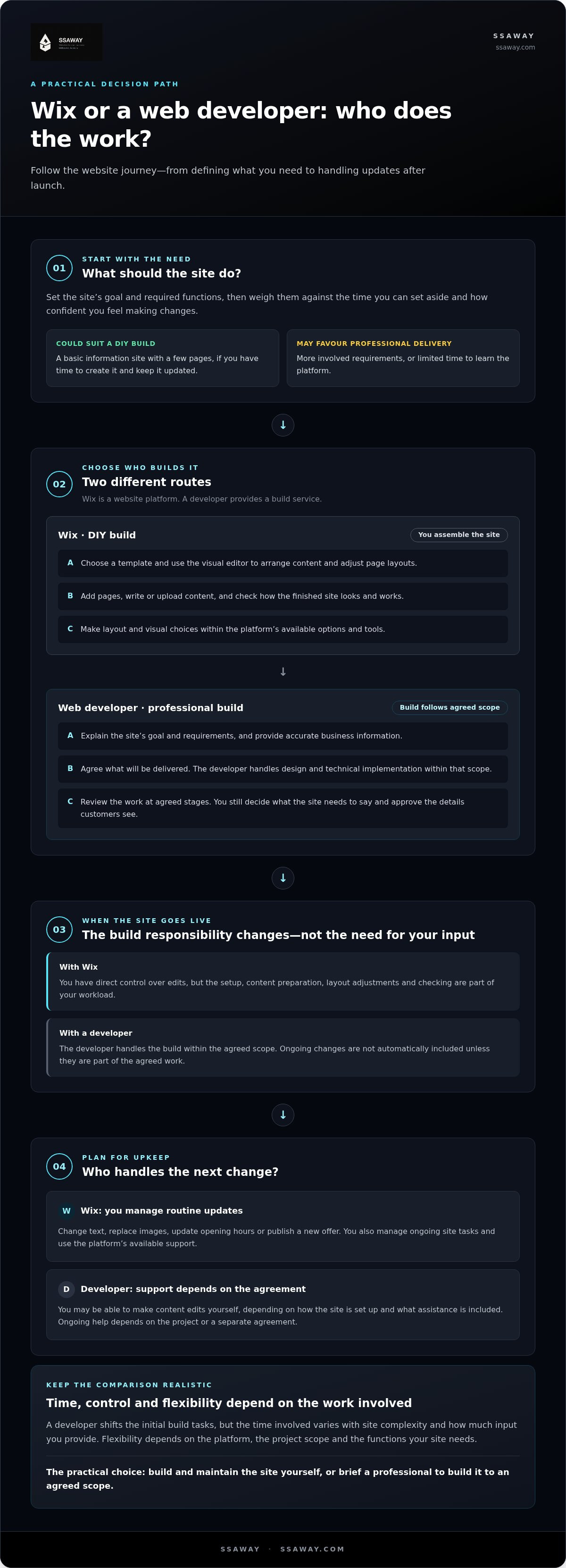
Use this checklist to choose between Wix and a web developer
Make the decision from a written scope, not a vague idea of needing “a website”. List what the site must do now, what can wait and how much of the work you’re willing to own. This gives you a practical basis for the wix vs hiring a web developer australia choice.
- Define the site’s main job. Should it explain your services, collect enquiries, display products or support online sales? Keep the primary goal clear.
- List the essentials. Write down the pages, content, visitor actions and any integrations the site needs at launch.
- Assess your time and skills. Be realistic about the time you can give the build and later updates, plus your comfort with writing, arranging pages and checking how they appear on mobile.
- Choose the build path. If the scope is straightforward and you’re ready to handle the work, DIY may fit. If requirements need tailored implementation or you’d rather hand over the build, consider a developer.
Set your website scope before choosing
Start with the pages visitors need, such as service details, an about page and contact information. Note the action you want them to take on each page, whether that’s sending an enquiry, calling or viewing a product. Then separate launch essentials from optional features you could add later. A focused site with one main purpose may suit a one-page website for a small business.
For an online shop, document what customers need to browse and do, along with any connections your selling process requires. This makes the scope more concrete before you compare build paths. The e-commerce website packages guide can help you think through requirements for an online store.
Also record likely changes. Will you regularly add services, publish new offers or update product information? A short list of expected changes can reveal whether you’re comfortable managing the site yourself or would prefer help with implementation.
Be honest about the work you want to own
A DIY build asks for more than an hour to pick a template. You’ll need to prepare content, arrange pages, check links and forms, review mobile layouts and make routine edits after launch. Think about whether you can fit those tasks around running your business. If the answer is “only if I get a quiet week”, plan for the possibility that updates may slip.
Hiring a developer shifts the build work, but not the need for your input. You’ll still need to explain the business, supply accurate content, make decisions and review the work. A clear brief helps keep your involvement focused on the details only you can provide.
Decision rule: If your requirements are simple and you have time to build and maintain the site, DIY is a practical option. If the work or functionality feels beyond what you want to manage, choose developer-led delivery. If professional delivery suits your scope, explore website options built by SSAWAY.
A developer-built alternative: what working with SSAWAY looks like
If you’d rather not build the site yourself, SSAWAY provides a developer-built option for Australian businesses. There’s no upfront payment, and you review and approve the finished website before payment. You can see the completed work before paying, without taking on the build yourself.
That can help if your main concern in the wix vs hiring a web developer australia decision is committing before you know what the finished site looks like. You’ll still need to decide what your website should do and provide accurate business information, but you won’t need to assemble the website yourself.
What the SSAWAY process removes from the decision
No upfront payment removes an initial payment from the starting point. The finished website is presented for your review and approval before payment is required. You remain involved in defining your needs and expectations, supplying business content and reviewing the result. SSAWAY handles the website build.
Think about the pages and functions your business needs, then use that scope to decide whether professional delivery fits. You remain involved in the decisions and in supplying business content. The key difference is that you review the finished website before payment.
Match the website format to the job
A one-page website may suit a focused business presence where visitors mainly need a clear introduction and a way to take the next step. A shopfront website presents a business and what it offers. An e-commerce website is for a business that wants to sell online. For requirements beyond these formats, custom development can be shaped around the project’s needs.
Choose by purpose, not by the longest feature list. If you need a compact introduction, a one-page option may be enough. If your business needs a shopfront or an online store, consider those formats instead. If the required layout or functions call for a tailored build, custom development may be relevant. The best fit depends on what your customers need to see and do.
Before taking the next step, write down your site’s main goal, essential content and required functions. That gives you a useful starting point for considering a developer-built website. Explore SSAWAY website services to see the available website formats and choose one that fits your business.
Make your next website decision with confidence
The right answer to wix vs hiring a web developer australia comes down to the work you want to take on. Before you commit, write down what the website needs to achieve, what visitors should be able to do and how much time you can give to building and updating it. That short brief can turn uncertainty into a clear next step.
If you’d prefer a professional to build the site, SSAWAY offers one-page, shopfront and e-commerce website packages, as well as custom development with SEO optimisation. Projects are priced under A$1,000, with no upfront payment. You review and approve the finished website before payment.
Start with the format that best matches your business need, not the one with the most features. Explore SSAWAY website services and take the next step towards a website built around your business.
Frequently Asked Questions
Is Wix good for a small business in Australia?
Yes, Wix can suit a small business if its site needs are straightforward and someone has time to manage the build. For example, a business that needs clear service information, contact details and a way for customers to enquire may find a site builder practical. Before choosing, list your must-have features and check whether the platform’s current tools support them. The best fit depends on your business, not its size alone.
Is hiring a web developer better than using Wix?
Not automatically. In the wix vs hiring a web developer australia decision, a developer may suit you if you want professional help implementing a defined scope or need a more tailored solution. Wix may work if you’re comfortable building and maintaining the site yourself. Compare the time and responsibility you’ll take on, not just the build method. A developer’s work also depends on the project scope you agree on.
Can I move a Wix website to another platform later?
Don’t assume you can transfer a Wix website intact in a single step. Moving your content, design and site functions can involve different processes, and some elements may need to be recreated on the new platform. Before choosing Wix, check its current export and migration options against your future plans. Keep your text, images and domain details organised so you have a clear record if you decide to change platforms.
How much does it cost to hire a web developer in Australia?
There’s no single price: the cost depends on the work involved and how the project is priced. A site with a small number of standard pages has a different scope from one needing custom functions, integrations or an online shop. Ask for costs to be tied to clear deliverables, such as agreed pages and functions. Also account for ongoing support or updates, which may be separate from the initial build. SSAWAY’s website projects are priced under A$1,000, with no upfront payment and payment after you review and approve the finished website.
Can I build an online shop with Wix, or should I hire a developer?
Yes, Wix offers tools for building an online shop, but whether it suits depends on how you plan to sell. List what customers must be able to do, such as browse products, complete checkout and receive order information. Then check that the platform’s current tools cover those needs. If your shop needs specialised workflows or connections to other systems, a developer may help implement a solution around the agreed requirements.
What if my business website needs features Wix cannot provide?
First, define the feature in practical terms: what should the visitor do, and what should happen next? Then check whether Wix supports it directly or through a suitable integration. If it doesn’t meet a requirement that’s essential to your business, consider a developer-led build with that function included in the project scope. Keep optional ideas separate so they don’t distract from the features your site needs to work.
Do I still need to update a website after a developer builds it?
Yes. Business information can change after launch, so keep details such as services, prices, contact information and current offers accurate. A developer-built site doesn’t automatically mean someone else will make every future edit. Before the project ends, make sure you know how routine content changes will be handled and what support, if any, is part of the agreed work. A simple review reminder can help you catch outdated information.


