
The cheapest-looking website can cost more once the store is running. That’s why a fair shopify vs custom website cost comparison australia needs to look beyond the initial build quote or monthly platform fee.
If you’re finding quotes hard to compare, start by separating Shopify’s recurring plan, app and transaction charges from the cost of setting up and maintaining a custom site. Which option costs less over time depends on your store’s features, support needs and plans for growth, as well as how much flexibility you need.
This guide compares the full cost picture, from setup and ongoing expenses to the practical trade-offs behind each approach. You’ll see which costs are fixed, which can change with your requirements and where future limitations may matter. SSAWAY’s custom development projects have no upfront payment, and clients review and approve the completed website before paying.
Key Takeaways
- Compare the same store requirements, including products, payments and content responsibilities, before weighing up options.
- Use a shopify vs custom website cost comparison australia to map setup, recurring, transaction-related and change costs side by side.
- Separate platform fees from design and development scope. They’re connected decisions, but they’re not the same cost.
- Match the approach to your store’s needs: Shopify can suit standard commerce requirements, while custom development can support more specific features.
- Include post-launch costs, such as platform services, apps, hosting, maintenance and future changes, in your total ownership comparison.
Shopify vs custom website costs in Australia: what are you actually comparing?
A Shopify store uses a hosted commerce platform. Shopify supplies the platform, while your business chooses a plan and decides how much design, setup and extra functionality it needs. A custom website is built to an agreed scope, with its design and features planned around the project’s requirements.
These options involve three related but separate decisions: which platform to use, how the website should look and what development work is required. A Shopify store can still need professional design and setup. A custom site can also rely on third-party services. The label alone doesn’t tell you what a quote includes.
Comparing a monthly subscription with a one-off build quote can therefore give the wrong impression. One is an ongoing platform charge; the other may cover a defined set of project work. For a sound shopify vs custom website cost comparison australia, compare the same store requirements and include costs that continue or change after launch.
Total website cost includes setup work plus ongoing and variable expenses over the period you’re comparing. These can include platform access, payment processing, apps, hosting, maintenance and changes. The exact mix depends on the setup. Start by listing what your website needs to support, from taking orders to managing customer-facing features. The broader E-commerce context can help frame those requirements.
What counts as the cost of a Shopify store?
List each part separately: the platform subscription, theme or design work, apps, payment processing and any professional setup. The plan and configuration affect which charges apply, while apps can add separate recurring fees. Payment charges depend on the provider and its current terms. Check Shopify’s official Australian pricing and payment information before using figures in a comparison, as fees can change.
Mark every item as one-off, recurring or transaction-based. Design work, for example, may be part of setup, while a subscription or app fee may recur. Don’t assume every store needs the same extras. For each app, note the feature it provides and whether that feature is essential to your store.
What counts as the cost of a custom website?
A custom quote may cover discovery, design, development, content preparation, integrations and launch work. The inclusions depend on the agreed scope. A quote that excludes content preparation or a required integration isn’t directly comparable with one that includes them.
Separate build work from post-launch costs such as hosting, maintenance and future changes. These are distinct commitments, not automatic inclusions in every project. Record what the scope covers, what remains ongoing and how changes are handled. That gives you a clearer basis for comparing a custom build with a Shopify setup.
Neither route is automatically cheaper. A store with straightforward needs may require a different scope from one with distinctive workflows or integrations. List the work and services your business actually needs, then compare the total over the same period. That’s more useful than comparing headline figures alone.
Shopify vs custom website costs over time: map every charge
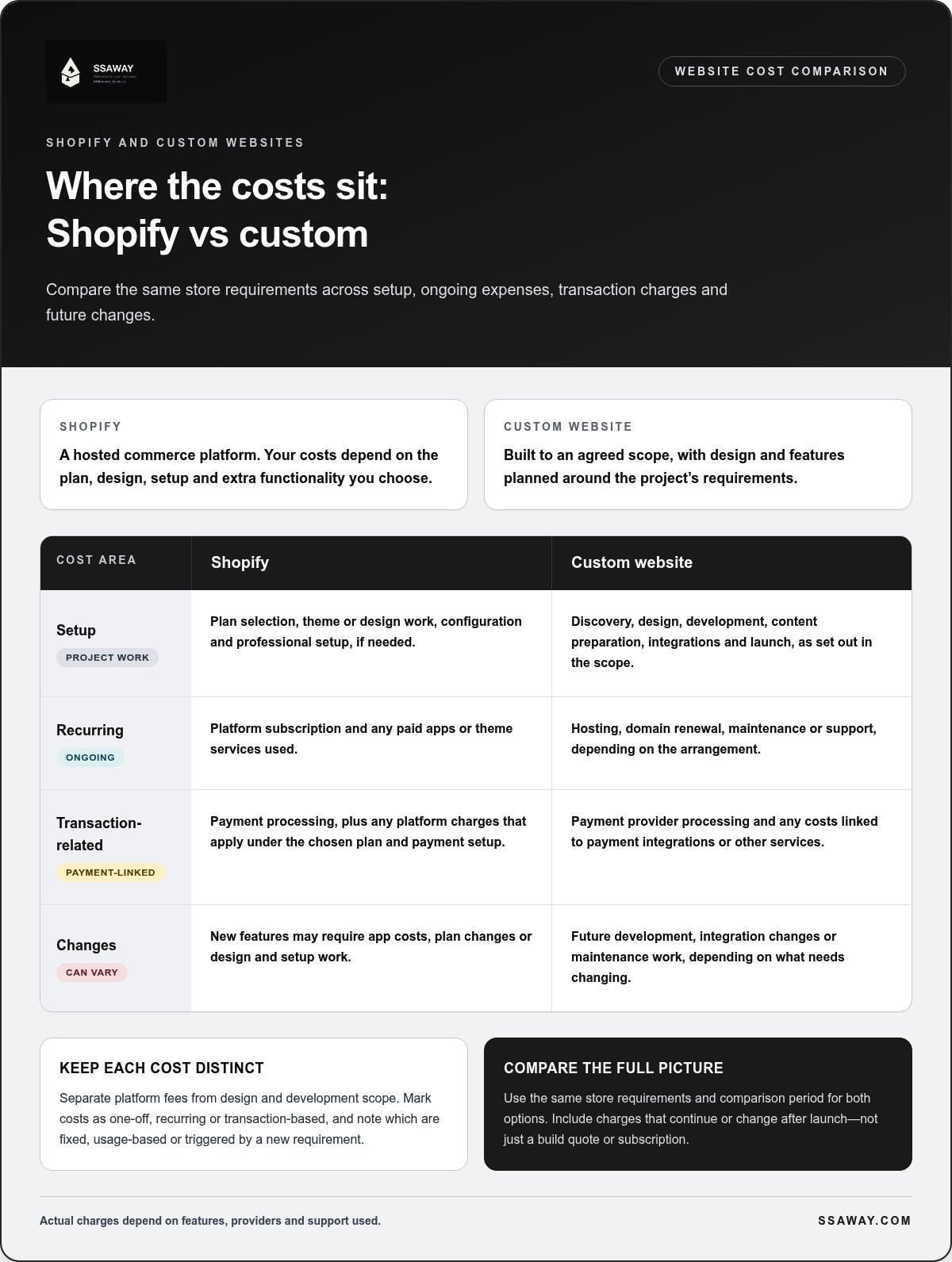
A fair shopify vs custom website cost comparison australia puts costs into the same categories, then checks which ones apply to your setup. Use the table as a checklist, not a quote: actual charges depend on the features, providers and support your store uses.
Australia’s online selling environment also shapes what a store needs to do. The U.S. International Trade Administration’s Australian e-commerce market overview offers local context, but your payment methods, products and operating needs determine which cost lines to include.
| Cost area | Shopify | Custom website |
|---|---|---|
| Setup | Plan selection, theme or design work, configuration and professional setup, if needed. | Discovery, design, development, content preparation, integrations and launch, as set out in the scope. |
| Recurring | Platform subscription and any paid apps or theme services used. | Hosting, domain renewal, maintenance or support, depending on the arrangement. |
| Transaction-related | Payment processing, plus any platform charges that apply under the chosen plan and payment setup. | Payment provider processing and any costs linked to payment integrations or other services. |
| Changes | New features may require app costs, plan changes or design and setup work. | Future development, integration changes or maintenance work, depending on what needs changing. |
Include recurring and variable charges in a total-cost comparison because they can continue or change after launch. Compare both options over the same period and note which charges are fixed, usage-based or triggered by a new requirement. This gives you a more realistic view than comparing a build quote with a subscription alone.
Which Shopify costs can continue after launch?
Keep the platform plan, paid apps, theme work and payment processing as separate line items. An app is an optional add-on in general, but may be needed for a particular store feature or configuration. Theme or design work may be a setup expense, while paid services can recur. Check Shopify’s Australian pricing and its Australian payment information for current fees and conditions.
Which custom website costs can continue after launch?
A custom site may have separate hosting and domain renewal costs, plus maintenance, security work or future development. These aren’t automatically included in the original build. Ongoing needs depend on the website, its hosting arrangement and any support plan. A simpler site may need a different level of work from one with more integrations or frequent changes. Compare the actual scope rather than assuming a custom site costs nothing to run.
For each cost, record the amount, when it applies and what triggers it. If you’re weighing a platform-led store against a tailored build, SSAWAY’s e-commerce website and custom development options can help you define the work around your store requirements.
Shopify or custom website: compare control, flexibility and store needs
Price matters, but so does what the website lets your team do. Shopify provides a hosted commerce platform with store-management tools. Custom development starts with a defined scope and builds the website around the requirements in that scope. Both approaches involve trade-offs. Neither is automatically cheaper, easier to manage or better for every Australian business.
Compare how each option fits your day-to-day operations, not just how it looks at launch. Consider:
- Time to launch: A hosted platform can reduce the need to build core store functions from scratch. A custom project requires time to define, design and develop its agreed features.
- Design control: Shopify themes and design changes shape the storefront within the platform’s environment. A custom build can be designed around a particular user experience, subject to the project scope.
- Features and integrations: Shopify features and integrations may cover standard requirements. Distinct workflows or specific functionality may call for custom development.
- Management and reliance: Shopify store owners use platform services to run the store. Management of a custom site depends on how it is built, hosted and supported.
These differences affect costs too. The shopify vs custom website cost comparison australia is more useful when it reflects your actual requirements, including who will manage products, content and changes after launch.
When might Shopify be the practical fit?
Shopify may suit a business that wants a hosted commerce platform and familiar tools for managing products and orders. If your needs are relatively standard and suitable features or integrations are available, it can provide a practical starting point. Factor in the ongoing plan and any paid add-ons your setup uses. Convenience still comes with recurring commitments and reliance on the platform’s services.
When might custom development be worth considering?
Custom development may be worth exploring if your store depends on a specific workflow, distinct functionality or tighter control over how parts of the site work. Ask whether that difference matters to customers or daily operations. Set out the required features, then weigh the build scope against future support and development needs. More flexibility can also mean more responsibility for maintaining the chosen setup.
To make the decision practical, list the tasks your website must handle today and separate essentials from preferences. A store selling standard products may prioritise straightforward product and order management. A business with unusual ordering steps should define those steps before choosing a platform or custom scope.
Consider who will update products, change page content and manage integrations. A system that suits the build but feels difficult for the team to operate may create avoidable work. A system that handles today’s needs may become restrictive if business processes change. Base your decision on real operational needs, not a blanket claim about which route is best.
For more guidance on assessing the fit, SSAWAY’s e-commerce website packages article outlines considerations for choosing a package.
How to compare Shopify and custom website quotes for your business
A useful quote comparison starts with one shared brief. If a Shopify estimate assumes a small catalogue and supplied product content, while a custom quote includes more products and content preparation, the totals won’t show which approach suits your business. A shopify vs custom website cost comparison australia should match the store scope, payment needs and responsibilities.
Use this four-step method to make the differences visible:
- List the requirements. Record the products, store functions, design needs, payment methods and integrations the website must support. Mark essentials separately from nice-to-haves.
- Map the costs. Note setup work, recurring charges, transaction-related fees and possible future changes for each option. Keep one-off and ongoing costs separate.
- Identify ongoing work. Write down who will add products, prepare content, manage updates and arrange maintenance or support. Include the work your team will handle itself.
- Compare the fit. Consider launch needs, internal capacity, flexibility and future plans alongside the cost. A lower initial quote may not cover the same work or ongoing commitments.
Build a like-for-like comparison before choosing
Make each option answer the same brief. Check that product numbers and types, payment needs, content responsibilities and required features match. For a broader overview of factors that can shape a project quote, see this guide to website design costs in Australia.
Then read each scope in plain language. What will be delivered? What’s excluded? Who supplies content and product details? What happens at handover? Record who has access to the website and its relevant accounts, and how future changes will be requested, handled and costed. These details affect how much work stays with your team after launch.
Keep the comparison practical. If one option includes an integration and the other doesn’t, mark the difference instead of treating the figures as directly comparable. If a responsibility is unclear, note it as unresolved rather than assuming it’s covered.
Match the option to your business stage
A straightforward first store may prioritise getting essential products online and managing orders with the team’s current capacity. Standard requirements may align with a platform’s available tools. More complex workflows can make tailored development worth assessing, but weigh the specific benefit against the agreed build scope and future support needs.
Return to the checklist if your plans change. A store that needs only core selling functions today may later need different integrations or processes. Choose an approach that fits current operations without overlooking changes you can reasonably anticipate.
SSAWAY’s website options include one-page, shopfront and e-commerce website packages, as well as custom development. Clients review and approve the completed website before payment.
Choose your website path with a clear scope and payment process
The right choice is the one that covers the features your store needs and makes sense across its full ownership costs. Shopify can suit standard commerce requirements. Custom development can suit a project with specific workflows or features. Neither is the default winner. In a shopify vs custom website cost comparison australia, the build details and work after launch matter as much as the platform decision.
Before committing, make the scope clear. It should set out what the finished website needs to do, what will be delivered and what responsibilities continue after launch. That gives you a practical basis for reviewing the result against your expectations.
What to clarify before a website project begins
Start with the customer journey, from finding a product to completing checkout. Note the pages and information customers need, then list the launch requirements. Be specific about who provides product details, copy and other assets. Clear responsibilities help prevent assumptions from creeping into the work.
- Store essentials: List the pages, products and information needed at launch.
- Checkout needs: Describe how customers should place and complete an order.
- Deliverables: Set out the agreed website features and project outputs.
- Responsibilities: Record who supplies content and assets, and who manages them after launch.
- Review and handover: Agree how the completed work will be reviewed, what approval involves and what access or handover information will be provided.
Keep the wording straightforward. If a feature, task or responsibility matters to your business, include it in the scope rather than relying on a verbal assumption. This makes it easier to judge whether the finished website matches the agreed work.
How SSAWAY reduces upfront project uncertainty
SSAWAY projects have no upfront payment. Clients review and approve the completed website before payment, giving them the chance to assess the finished work before paying. The agreed project scope still matters: it sets out the expected features and deliverables you’ll review.
Choose the route that fits the store you need now and the responsibilities you can manage over time. A well-defined scope keeps the decision grounded in real requirements, not assumptions about which option is always cheaper or more flexible.
SSAWAY offers fixed-price one-page, shopfront and e-commerce website packages, as well as custom development. Projects are priced under A$1,000, with no upfront payment and payment after you approve the completed website.
Make your next website decision with confidence
Turn the comparison into a clear brief. Write down what the store must do now, what may change later and which ongoing responsibilities your team can manage. That gives you a practical basis for choosing a platform or build that fits, without paying for complexity you don’t need or overlooking requirements that matter.
A useful shopify vs custom website cost comparison australia should leave you clear about both the work being delivered and the commitments that follow. SSAWAY provides website packages with SEO optimisation and custom development for businesses across Australia. Clients review and approve the completed website before payment.
Ready to turn your requirements into a clear project? Discuss your website project with SSAWAY. A well-defined scope is a solid first step towards a website that works for your business now and can support what comes next.
Frequently Asked Questions
Does Shopify cost less than a custom website in Australia?
Not necessarily. The result depends on the build scope, Shopify plan and app choices, payment processing, hosting and future changes. A simple launch may have different initial costs from a tailored build, but that doesn’t settle the long-term comparison. For a useful shopify vs custom website cost comparison australia, match the required features and responsibilities, then compare setup with ongoing ownership. Check current Shopify fees in its official Australian information.
What ongoing costs should I include when comparing Shopify and custom development?
Include possible platform subscriptions, apps, payment processing, hosting, domain renewal, maintenance and future development. Not every item applies to every project, and provider terms and configurations differ. An app, for example, may only be relevant if your store uses its particular function. Keep recurring and usage-based charges separate from initial design or development work. A complete comparison accounts for the costs and responsibilities that continue after launch.
Does Shopify charge transaction fees in Australia?
Charges depend on the current plan, payment provider and transaction setup. Payment processing charges are set in connection with the chosen payment service, while separate platform-related charges may also apply under Shopify’s terms. Don’t assume every Australian merchant has identical fees. Check Shopify’s official Australian pricing and payment documentation for current conditions before estimating transaction costs.
Can I move a Shopify store to a custom website later?
Yes, a store can be moved, but migration involves planning and rebuilding, not simply switching platforms. Work may include transferring product, customer, order and content data, setting up redirects and recreating platform-specific features. The tasks depend on the store and available export or integration options. Before choosing a platform, consider what data and account access you’ll need later, and how you’ll handle features that don’t transfer directly.
Do I need to budget for maintenance with a custom website?
Often, yes, although the work required depends on the build and hosting arrangement. Possible ongoing tasks include hosting, domain renewal, security updates, backups, troubleshooting and feature changes. Custom development doesn’t automatically include maintenance, or mean that maintenance won’t be needed. Adding a new integration after launch, for example, may require development work. List ongoing responsibilities separately so they don’t disappear from the comparison after the initial build.
Is Shopify suitable for a small Australian online store?
It can be, if the platform’s current tools align with your products, checkout needs, integrations and preferred way of managing the store. A small catalogue with familiar selling requirements may have different needs from a store with unusual ordering steps. Consider expected growth too: would planned changes fit the platform’s capabilities or require extra configuration? Compare must-have features with Shopify’s current tools and terms before deciding.
When should an Australian business choose custom website development over Shopify?
Consider custom development when your business needs tailored workflows, distinct features or more control over how the website is built. A process that doesn’t fit standard store tools, for instance, may justify defining a custom scope. Balance that need against the build work, ongoing support and future changes involved. Custom isn’t automatically right for every store. Compare both options against the same requirements before committing.